By the time we reach 2028, the gaming industry is expected to look noticeably different from what we know today. Development cycles are getting longer, budgets are growing, and expectations are higher than ever. Studios are no longer racing to release games quickly — they are carefully crafting experiences meant to last for years. As a result, many of the most ambitious projects in development are quietly targeting 2028.
While not every title has a confirmed release date yet, strong industry signals, ongoing development timelines, and studio roadmaps give us a clear picture of what might define the year. Below is a fully original and carefully structured look at the biggest games expected in 2028.
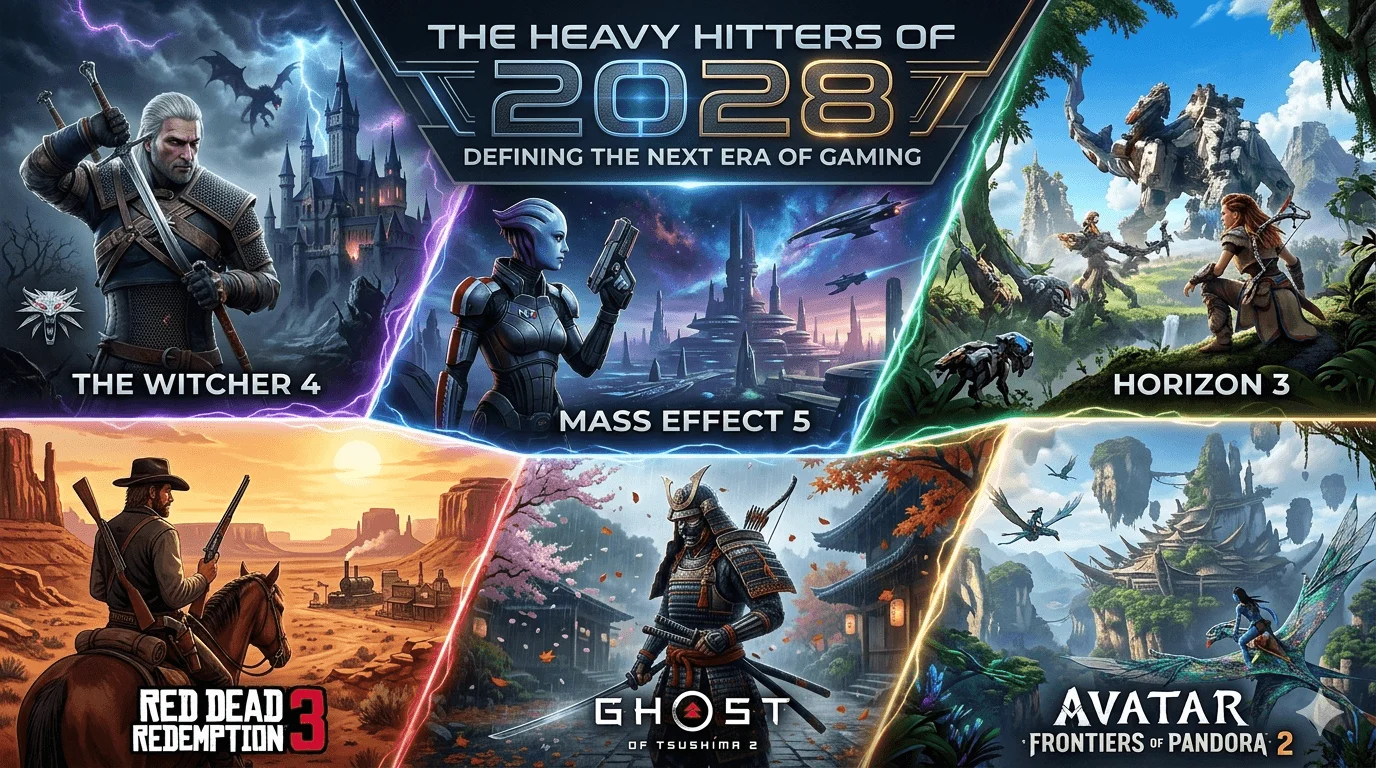
1. The Witcher 4
After the success of The Witcher 3, expectations for the next installment are enormous. CD Projekt RED is building this game on a new engine, aiming for a more dynamic world and deeper storytelling systems. The studio appears focused on creating a long-term RPG platform rather than a one-time experience.
2. Mass Effect 5
BioWare’s return to the Mass Effect universe carries both excitement and pressure. Fans are hoping for a strong narrative comeback, with meaningful choices and a cohesive story. If development stays on track, this could be one of the defining RPGs of the decade.
3. Horizon 3
The Horizon series has steadily grown into one of Sony’s flagship franchises. A third entry is expected to expand its open world even further, possibly introducing more advanced AI ecosystems and deeper exploration mechanics.
4. Red Dead Redemption 3
Although not officially confirmed, industry expectations strongly point toward Rockstar returning to the Red Dead universe. If it arrives in 2028, players can expect an incredibly detailed open world, slow-paced storytelling, and unmatched environmental realism.
5. Ghost of Tsushima 2
Building on the original’s success, this sequel is expected to refine combat, expand the map, and deepen its narrative themes. There’s also speculation about a broader setting beyond Tsushima, which could significantly increase its scope.
6. Avatar: Frontiers of Pandora 2
Ubisoft is likely to continue exploring the Avatar universe after the first game. A sequel could push visual fidelity even further while improving gameplay depth and player freedom within its alien world.
7. Starfield 2
If Bethesda continues its pattern, a follow-up to Starfield could arrive later in the decade. With more refined systems and better exploration mechanics, a sequel could address the limitations of the original while expanding its universe significantly.
8. Elden Ring 2
FromSoftware rarely rushes sequels, but the massive success of Elden Ring makes a continuation almost inevitable. A second entry could introduce more dynamic world systems and new approaches to open-world design.
9. Assassin’s Creed Nebula
Following Ubisoft’s multi-project strategy, Nebula is rumored to explore multiple regions within a single game. If it lands in 2028, it could represent one of the most ambitious entries in the franchise.
10. Cyberpunk Multiplayer Project
Beyond single-player experiences, CD Projekt is reportedly investing in a multiplayer expansion of the Cyberpunk universe. This could evolve into a long-term live service experience if executed correctly.
The Bigger Picture: What 2028 Represents
What makes 2028 particularly interesting is not just the individual titles, but the direction of the industry as a whole. Games are becoming more like platforms — designed to grow, evolve, and retain players over time rather than simply deliver a one-off experience.
We’re also seeing a stronger emphasis on player-driven storytelling. Instead of fixed narratives, developers are building systems that allow stories to emerge naturally based on player decisions. This creates a more personal and unpredictable experience.
Another key trend is technological maturity. By 2028, current-generation hardware will be fully optimized, and developers will know exactly how to extract every bit of performance. This means fewer technical compromises and more focus on creativity.
Looking ahead, 2028 has the potential to be one of the most ambitious years in gaming history. With major franchises evolving and new ideas taking shape, the industry is clearly moving toward deeper, richer, and more connected experiences.
While release dates may shift — as they often do — the overall direction is clear. Developers are aiming higher than ever before, and players are the ones who will ultimately benefit from that ambition.
If even half of these projects deliver on their promise, 2028 won’t just be a great year for gaming — it could be a defining one.